
Food Sort: Puzzle Game
PlaydayyPuzzle
4.6671.00 Reviews
- Version
- 1.0.24
- Installs
- 1.00M
- Age Rating
- Everyone
Screenshots
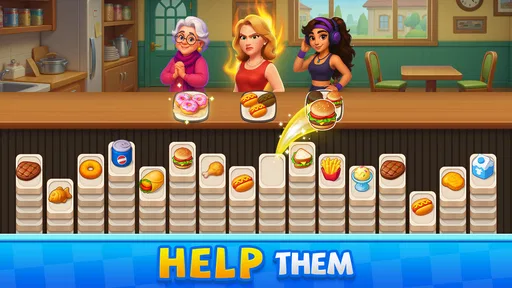
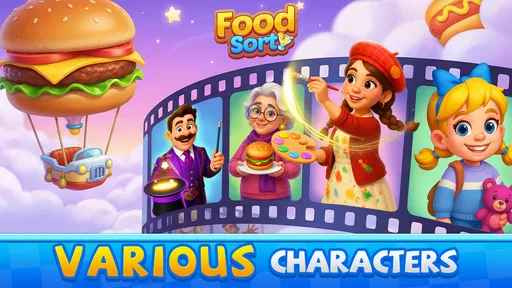
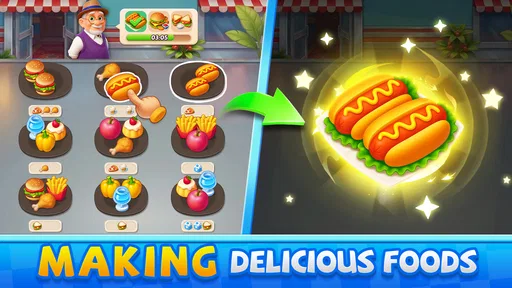
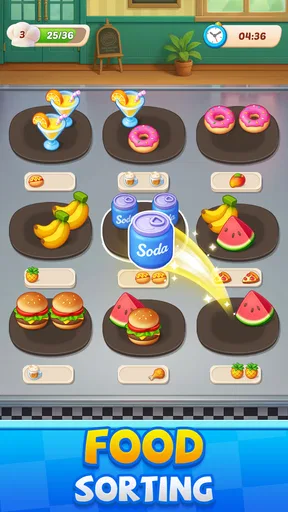
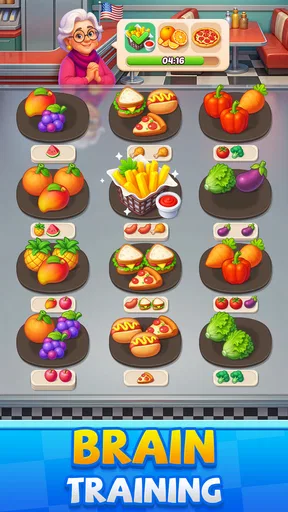
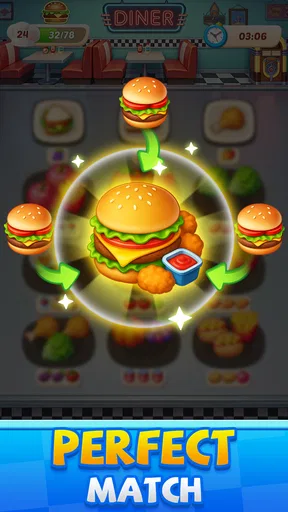
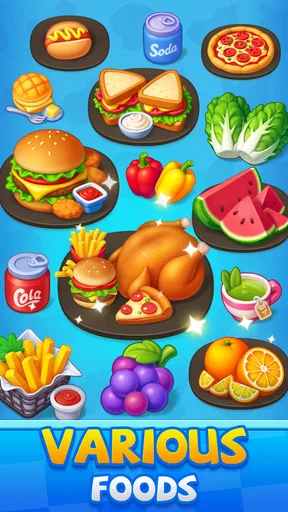
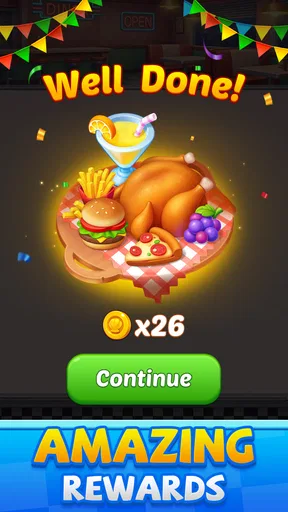
Our Review of Food Sort: Puzzle Game
 Analysis by Appyee
I found Food Sort: Puzzle Game to be the kind of mobile puzzle that makes a quiet five-minute break feel pleasantly organized. It comes from Playdayy and focuses on sorting food, matching items, and completing orders through short, easy-to-understand challenges. The basic idea is simple enough for a first-time player to grasp immediately, but the decisions become more interesting once several items compete for limited space or attention.
What I like most is that the game does not ask me to learn a complicated control system before I can enjoy it. I can start with the central sorting task, make a few moves, and quickly understand whether its calm rhythm suits me. It is free to download, rated for Everyone, and available on devices running Android 7.0 or later. That makes it a practical choice for casual players who want something approachable rather than a demanding strategy game.
What to expect when you begin
The store short description calls it Food Sort, and that tells you more about the experience than a dramatic genre label would. This is a puzzle game built around arranging food items into sensible groups and working toward orders. I would not install it expecting a story campaign, character development, or an action-heavy challenge. Its appeal is the small satisfaction of turning a visually mixed arrangement into something neat and complete.
The first moments are reassuring because the objective is visible in the play area. Instead of studying a long set of rules, I can look at the available food, identify possible matches, and decide which move creates the most room for the next one. That makes the game suitable for a quick break on a commute, while waiting for an appointment, or when I want a low-pressure activity before bed.
The main thing to understand is that “chill” does not mean every move is meaningless. A careless placement can make later sorting awkward, especially when the available space becomes crowded. I found the best results came from treating each move as part of a small sequence rather than tapping the first matching item I noticed. The game remains accessible, but it rewards a little visual planning.
Its audience is broad. Younger players can understand the matching goal, adults can use it as a short mental reset, and anyone who enjoys tidy visual patterns may find the repeated completion loop satisfying. The Everyone content rating also makes it easier to consider for shared devices, although an adult should still make the final decision for a particular child and device.
The game has attracted over a million installs and holds a 4.6 average from around twelve thousand ratings. Those figures suggest that its straightforward format has found a substantial casual audience. I would still interpret that popularity carefully: it tells me the concept is accessible, not that every player will enjoy its pace. People who prefer deep logic puzzles, timed competition, or a strong narrative may find the experience too gentle.
Getting through the first setup
Installation itself should feel familiar to Android users. The game supports Android 7.0 and newer, so the main practical question is whether the device meets that requirement and has enough room for another game. Once it opens, I recommend giving the first board your full attention instead of immediately multitasking. The early arrangement is where the game teaches its visual language through play.
I would begin by scanning the entire board before making a move. Look for food that already appears close to a complete group, then check where that group can go without blocking another useful match. This habit is more valuable than rushing toward the most obvious item. It also makes the first successful action feel intentional rather than accidental.
Because the game centers on sorting and orders, the screen may initially seem busier than the actual decision process. My advice is to separate the board into three questions: what can be matched now, what needs space first, and which move leaves the most options afterward. That simple checklist prevents the common beginner mistake of filling a convenient spot and discovering that the next item has nowhere sensible to go.
There is no need to approach the first level as a test of speed. I played more comfortably when I treated it as a visual organization exercise. If a move looks uncertain, pausing for a moment is usually better than tapping quickly. The relaxed presentation supports that approach, and the game is more enjoyable when I focus on clean progress instead of forcing a rushed solution.
One practical point is worth keeping in mind before playing for a long session: the game is free, but it includes in-app purchases ranging from $0.99 to $99.90 per item. I would use the device’s purchase controls if children may play on it, and I would avoid assuming that every optional purchase is necessary to understand or enjoy the sorting concept. Starting without spending lets you judge the core loop fairly.
Your first meaningful success
The first satisfying moment arrives when a group is completed and an order moves closer to being finished. To reach it reliably, I would not begin by moving items randomly. First identify the clearest match, then check whether completing it opens a useful path for another group. The best opening action is often the one that creates flexibility, not simply the one that looks closest to completion.
For example, imagine that two food types are nearly organized while a third type is scattered across the board. I would usually work on the nearly organized group first if doing so clears a position needed by the scattered items. That creates a small chain of progress: one completed match improves the board, the improved board makes the next match easier, and the order begins to feel achievable rather than distant.
This is one of the game’s quiet strengths. It gives a beginner a visible result without requiring advanced puzzle vocabulary. I do not need to think in terms of complicated algorithms; I only need to notice how one placement changes the next choice. After a few successful actions, the board stops looking like a collection of separate food items and starts looking like a set of connected decisions.
If your first attempt does not go smoothly, I would not treat that as evidence that the game is difficult or that you have missed a hidden rule. Sorting puzzles often become awkward because of one early placement. Slow down, examine which spaces are still useful, and prioritize the move that restores room. The meaningful success is not just completing an order; it is learning why the arrangement became easier.
I also found that finishing a small objective can be more rewarding than chasing a perfect-looking board. The game’s appeal comes from steady visual improvement. Once the mess begins to resolve, the sense of completion is immediate, which is why it works well as a short-session game rather than something that demands a long uninterrupted commitment.
Where new players can become confused
The most likely confusion is assuming that every matching item should be moved as soon as it appears. In practice, a match can be useful now but harmful later if it occupies the only convenient space for another food type. I learned to ask, “What will this move prevent?” before asking only whether it makes progress.
Another common mistake is focusing on the order rather than the board. An order gives the session direction, but the board determines whether that order can be completed efficiently. When I concentrated too narrowly on one requested group, I sometimes ignored a different arrangement that would have created the space needed to finish it. Thinking one move ahead is often enough to correct this.
Players may also wonder whether the game is meant to be played continuously. I do not think it needs to be. Its structure suits short bursts, and stopping after a completed order feels natural. If you want a puzzle that can accompany a few spare minutes without demanding a full evening, that is a strength. If you want a long-form challenge with a detailed sense of progression, the limited scale of the sorting loop may feel repetitive.
The word “chill” can create another expectation issue. The mood is relaxed, but relaxed does not mean completely effortless. Some arrangements still require attention, and the satisfaction depends on noticing the consequences of a move. I would describe the difficulty as approachable rather than mindless. That distinction matters for players who want background entertainment while doing something else.
There is also a trade-off between the simplicity of the concept and its long-term variety. Sorting food is immediately understandable, which helps the first session, but the same central action remains the reason to continue. I enjoyed that consistency, yet players who need frequent changes in mechanics may prefer a broader puzzle collection or a traditional match-three game with more varied power-ups and board effects.
Because purchases are available, I would also keep an eye on how you personally respond to the game’s progress loop. A free starting point is useful for testing the experience, but spending should be a deliberate decision rather than a reflex after a frustrating arrangement. My approach would be to play enough unpaid sessions to decide whether the core sorting itself is enjoyable. If it is not, a purchase is unlikely to solve that basic mismatch.
How it compares with familiar puzzle choices
Compared with match-three games, Food Sort: Puzzle Game feels more deliberate and less dependent on rapid pattern recognition. In a match-three title, I often scan for combinations and enjoy cascades or chain reactions. Here, the pleasure comes from placement, space management, and completing an order through a sequence of tidy decisions. I would choose this game when I want to think calmly rather than chase visual explosions.
Compared with classic logic puzzles, it is easier to enter but may offer less intellectual depth for experienced puzzle fans. A traditional number puzzle or nonogram can demand sustained deduction across a larger structure. This game gives me a more immediate payoff and a friendlier learning curve, but its food-sorting framework is not a substitute for a serious brain-training routine.
Compared with hidden-object games, it asks for more planning after the initial visual scan. Finding a food item is not the whole task; deciding where it belongs and what that placement changes is the important part. That makes it a better fit for someone who likes organizing visual information, while a player who prefers pure observation may find the extra decisions unnecessary.
Compared with sorting games that are mainly about speed, this one is better suited to players who want a calmer tempo. I would not recommend it to someone looking for competitive leaderboards, intense timers, or a strong sense of performance pressure. Its value is in making small progress feel orderly, not in turning every round into a contest.
Small strategies that make the loop better
My first useful habit was to preserve open space. A nearly completed group is tempting, but an open position can be more valuable if several food types still need to move through it. Before committing an item, I look at the remaining loose pieces and try to keep at least one flexible route for the group that is hardest to organize.
The second habit is to solve from the most constrained group outward. If one food type has only a few sensible places while another has many, I deal with the restricted one first. This is a simple puzzle principle, but it makes a noticeable difference in a board built around limited arrangement choices. It also reduces the chance of creating a dead-looking cluster by filling space with an easy match.
A third useful approach is to use completion as a reset point. After an order is finished, I pause instead of carrying the previous plan into the next arrangement. The board may look familiar, but the available choices have changed. Treating each new order as a fresh planning problem keeps me from making automatic moves based on the last successful pattern.
I also recommend playing with a clear stopping rule. For me, completing one order or reaching a natural pause is better than continuing until the relaxed feeling disappears. This is especially helpful if you are using the game during work breaks. The short-session design can support a healthy boundary, provided you decide when to stop rather than letting the next puzzle choose for you.
Who will enjoy it, and who should skip it
I would recommend this game to someone who likes neat visual tasks, gentle puzzle solving, and progress that is easy to see. It is particularly approachable for a first-time player because the central action is obvious: organize food, make matches, and work toward completion. The free entry point also makes it easy to try without committing money immediately.
It is a good choice for short everyday situations. I can imagine opening it while waiting for a coffee, playing through a small section during a lunch break, or using it as a quiet transition between more demanding activities. The game gives my attention something specific to do without requiring the emotional investment of a story game or the concentration of a competitive puzzle.
I would skip it if your priority is deep strategy, multiplayer competition, narrative progression, or a constantly changing set of mechanics. I would also look elsewhere if you dislike repetition in a core puzzle loop. The food theme and order-based structure provide the identity, but they do not transform the game into a broad collection of unrelated challenges.
For families, the Everyone rating is encouraging, and the controls are approachable enough to make the concept understandable across age groups. Still, I would explain the optional purchase situation before handing over a device. The game can be evaluated on its free experience, and that is the fairest way to decide whether it belongs in a child’s regular rotation.
My next-step recommendation
After the first successful order, I would continue for a few more rounds without changing how I play. That gives enough time to discover whether the satisfaction comes from the sorting itself or only from the novelty of the first board. Pay attention to how often you are planning ahead, how often the arrangement feels cramped, and whether completing an order leaves you eager for another.
The current version is 1.0.24, and Playdayy presents the game as a free puzzle experience with optional purchases. I would keep the app if its calm sorting rhythm fits the moments when I normally reach for my phone. I would remove it if I find myself opening it out of habit but no longer enjoying the decisions. A casual game earns its place by making spare time feel better, not by demanding constant attention.
My final view is that Food Sort: Puzzle Game succeeds because it makes organization feel like play. It is friendly at the beginning, thoughtful enough to reward planning, and flexible enough for short sessions. Its limitations are equally clear: the central loop may not satisfy players seeking complexity or variety, and optional purchases mean I would approach longer-term play with a little spending discipline.
For a first-time user, my advice is simple: scan before moving, protect open space, solve the most restricted group first, and judge the game after several orders rather than one opening action. If that process feels relaxing instead of repetitive, you have probably found the right kind of puzzle for your routine. The best reason to try it is not the promise of endless novelty, but the small, reliable satisfaction of turning a crowded food board into a completed order.
Verdict
Strengths of Food Sort: Puzzle Game
- Simple drag-and-drop controls are easy for players of all ages.
- Short levels make it convenient for quick breaks or casual play.
- Colorful food designs give the game a cheerful, approachable look.
- Sorting challenges gradually encourage faster visual decision-making.
- Offline play is useful when traveling or using limited mobile data.
Limitations of Food Sort: Puzzle Game
- Repeated sorting patterns can make later sessions feel somewhat predictable.
- Mistakes may become frustrating when levels require precise item placement.
- Ads can interrupt the flow, especially between completed levels.
- Small food details may be difficult to distinguish on compact screens.
- Progress may feel slow for players seeking deeper puzzle variety.
Other Releases by Playdayy
View All
Solitaire 3D Fish
Card4.6

Goods Rush! 3D Sort Puzzle
Puzzle4.7
Similar Picks in This Category
View All
Block Blast!
HungryStudio4.8

Braindom: Brain Games Test
Lahana Game Studio4.6

AMAZE!
CrazyLabs LTD4.6

Sudoku - Classic Sudoku Puzzle
Oakever Games4.7

Art Puzzle - Puzzle Games
Easybrain4.8

Amaze GO!
Oakever Games4.9
Frequently Asked Questions
What is Food Sort: Puzzle Game and how do you play it?
Food Sort: Puzzle Game is a casual sorting game built around organizing colorful food items into matching containers, shelves, or trays. The basic objective is to group identical foods together while planning each move carefully. As levels progress, the layouts become more crowded and require better strategy. It is easy to learn, but later puzzles can be surprisingly challenging and may require patience rather than quick tapping.
Is Food Sort: Puzzle Game free to download and play?
The game can generally be downloaded and played for free, allowing players to try its core sorting puzzles without an upfront purchase. However, free gameplay may include advertisements, optional in-app purchases, or paid items such as hints, extra moves, boosters, or ad removal. Before downloading, check the current store listing because pricing, advertising frequency, and available purchases can vary between Android and iOS versions.
Does Food Sort: Puzzle Game work without an internet connection?
Many of the main sorting levels can usually be played offline, which makes the game suitable for short sessions while traveling or when mobile data is unavailable. Nevertheless, an internet connection may still be needed for advertisements, cloud saves, updates, special events, leaderboards, or restoring purchases. If offline access is important to you, test the game after installation and review its current store requirements.
Is Food Sort: Puzzle Game suitable for children?
The colorful food theme, simple controls, and non-violent gameplay make Food Sort: Puzzle Game generally approachable for children and casual players. Still, parents should review the listed age rating and privacy information, especially if the game displays advertisements or offers in-app purchases. Some advanced levels may also be frustrating for younger children, so parental supervision is recommended when purchases or online features are enabled.
Are there enough levels and features to keep the game interesting?
Food Sort: Puzzle Game is designed for short, repeatable puzzle sessions, with difficulty typically increasing as new arrangements and more complicated sorting situations are introduced. Its appeal comes from planning moves, correcting mistakes, and completing levels efficiently. Players who enjoy relaxing organization games should find plenty to do, although those seeking a story, multiplayer mode, or highly varied gameplay may eventually find the core sorting format repetitive.
Play our best games!


